Bahá’í guide
Bahá’í symbols explained: the ringstone, the Greatest Name and the nine-pointed star
What the Bahá’í ringstone symbol, the Greatest Name and the nine-pointed star mean, where they come from, and how to choose and use Bahá’í jewelry and art respectfully.
Walk into any Bahá’í home or look at a Bahá’í friend’s ring and you will see the same few designs again and again: a stylised emblem flanked by two stars, an elegant piece of Arabic calligraphy, a nine-pointed star. Each has its own origin and meaning. If you are choosing Bahá’í jewelry or art – for yourself or as a gift – it helps to know which is which, and how each is usually used.
A note on sources
Armant is a gift shop, not a Bahá’í institution. This guide summarises widely shared explanations; for authoritative information about the Bahá’í Faith, see bahai.org.
The ringstone symbol
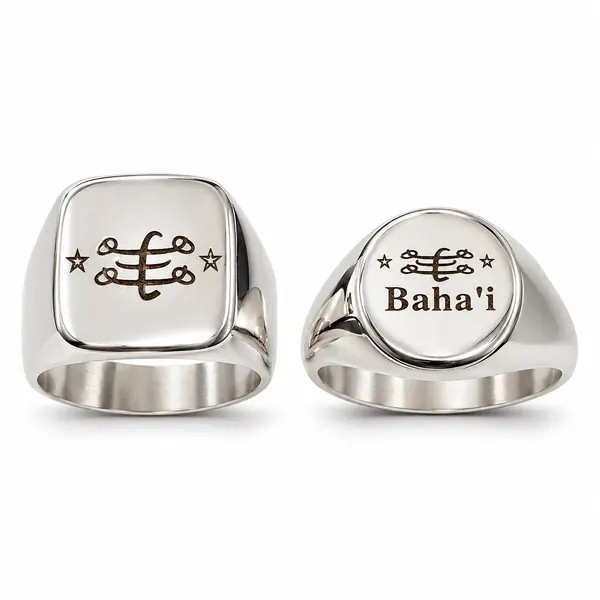
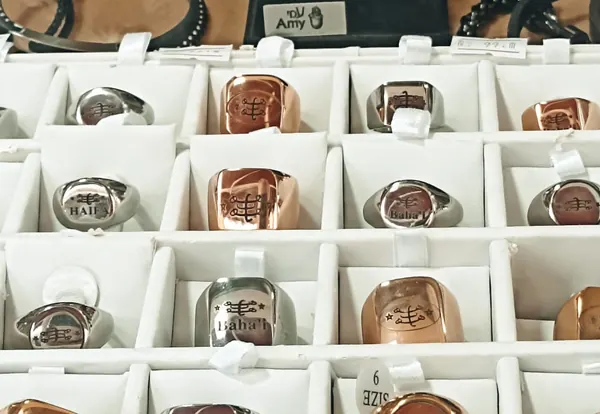
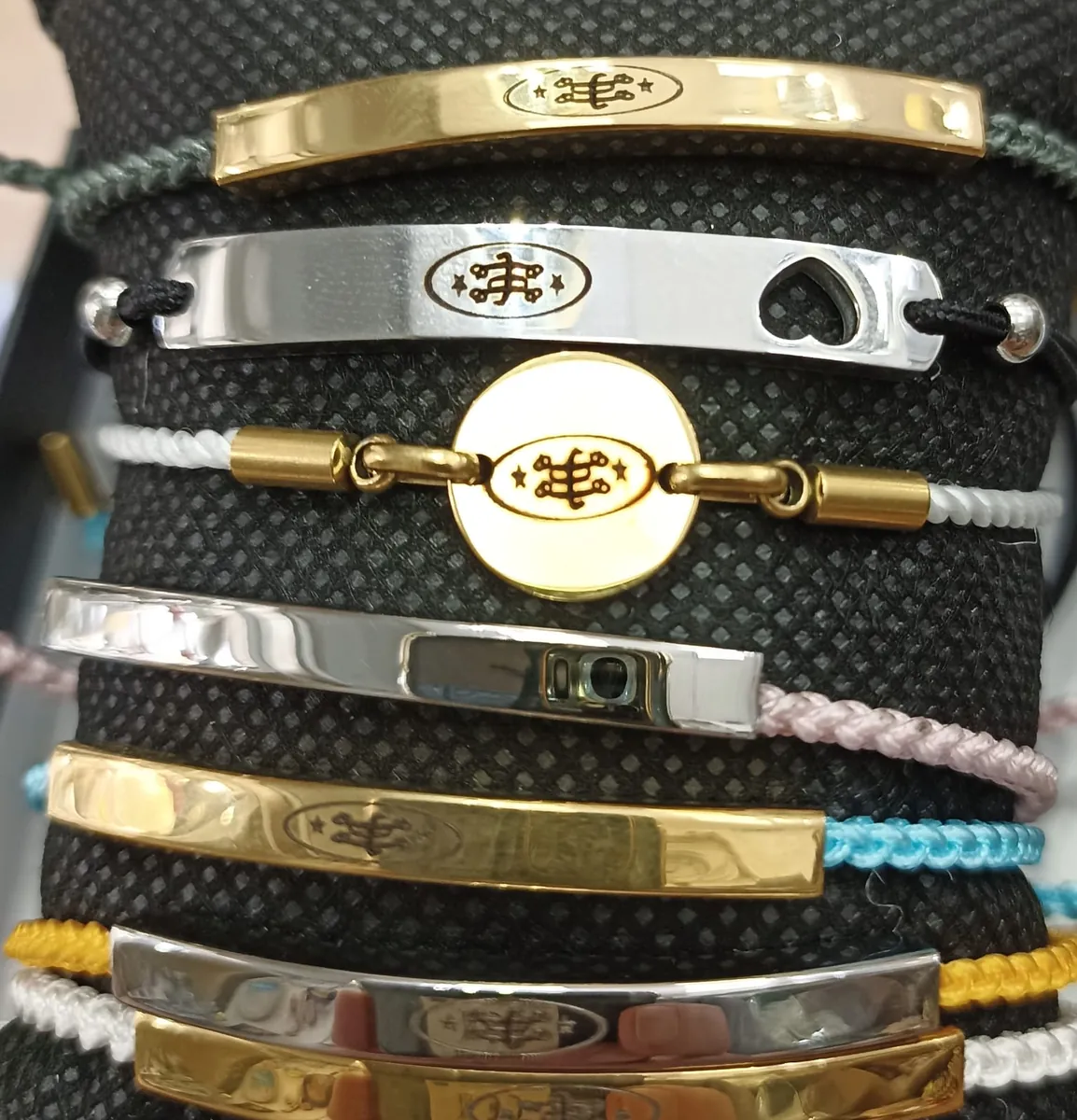
The ringstone symbol is the emblem most Bahá’ís wear. It was designed by ‘Abdu’l-Bahá, the eldest son of Bahá’u’lláh and the appointed interpreter of His writings, and – as the name says – it is traditionally engraved on the stone or face of a ring.
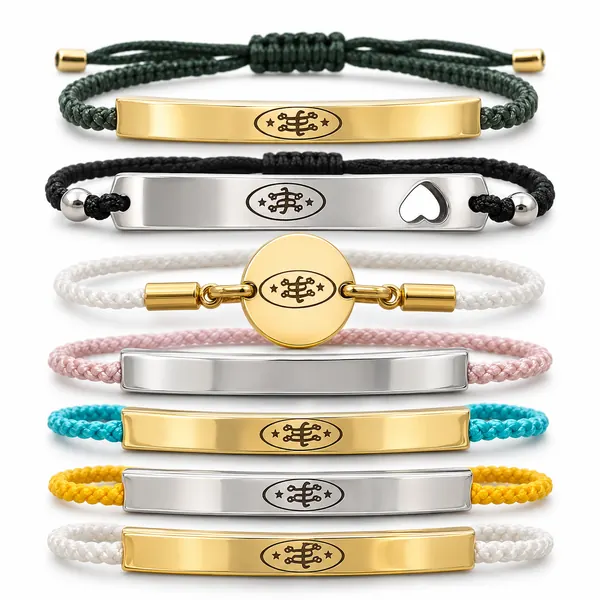
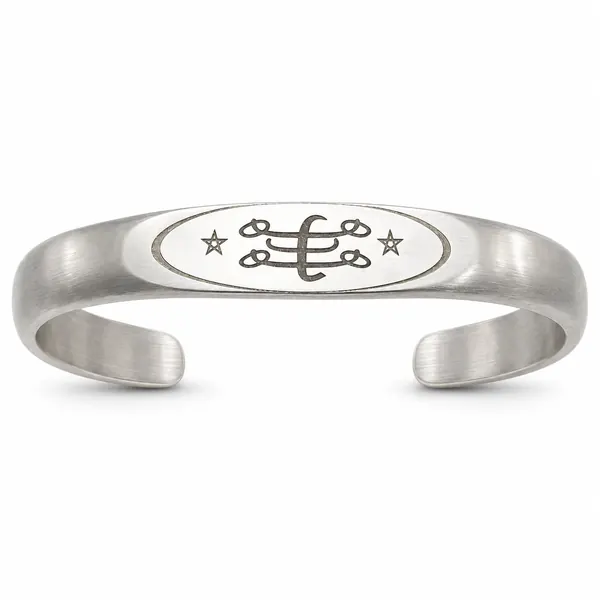
The design is a stylised arrangement of two Arabic letters, B and H, from the word Bahá, meaning “glory” or “splendour”. It is drawn as three horizontal strokes joined by a vertical one, with a small five-pointed star on each side. In the explanation most often quoted – a widely circulated commentary by Abu’l-Qásim Faizi –
- the top line represents the world of God, the Creator;
- the middle line represents the world of the Manifestations of God – the Messengers through whom God reveals His will;
- the bottom line represents the world of humanity and creation;
- the vertical line joins the three, standing for the Holy Spirit or the Will of God that connects them;
- the two stars are usually said to represent the Báb and Bahá’u’lláh, the twin founders of the Faith.
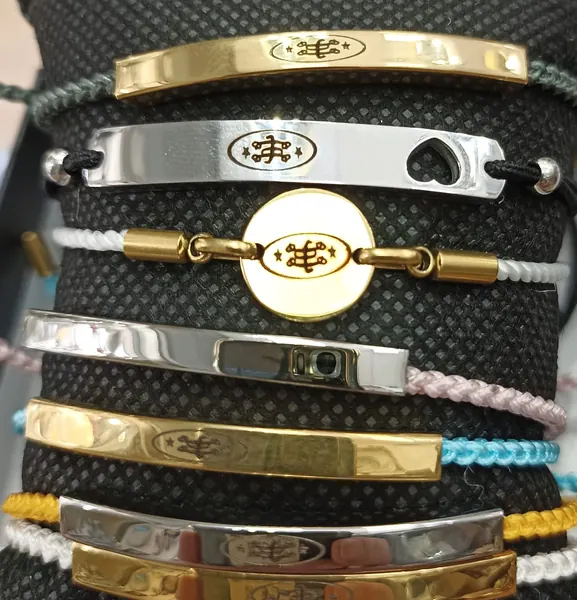
Today the symbol appears on signet rings, cord and leather bracelets, pendants and cufflinks. A ring is the traditional form, and a ringstone ring is one of the most personal gifts a Bahá’í can receive. See our Bahá’í jewelry collection.
The Greatest Name
The Greatest Name refers to Bahá and its derivatives. In art, it usually means the invocation “Yá Bahá’u’l-Abhá” – “O Thou the Glory of the Most Glorious” – written in a beautiful interlaced calligraphy by Mishkín-Qalam, a renowned 19th-century calligrapher and follower of Bahá’u’lláh. You will see it framed on the walls of Bahá’í homes and centres.
A shorter form, “Alláh-u-Abhá” (“God is Most Glorious”), is the greeting Bahá’ís use with one another.
Because the Greatest Name is a sacred invocation, it is treated with particular reverence. It is usually displayed in a place of honour – framed on a wall, not on the floor or in a bathroom – and many Bahá’ís prefer not to see it on everyday or disposable items. If you are giving it as a gift, a framed calligraphy is the classic choice.
The nine-pointed star
The nine-pointed star is the emblem most non-Bahá’ís associate with the Faith, and the one you will see most often on websites, books and jewelry. Its meaning comes from the number nine:
- In the abjad system, in which each Arabic letter has a numerical value, the letters of Bahá add up to nine.
- As the highest single digit, nine suggests completeness and unity.
- Every Bahá’í House of Worship around the world is built with nine sides and a dome.
The star has no single official design – it may be drawn with sharp or rounded points, solid or as an outline – and it often appears alongside the word “Bahá’í” on jewelry.
The five-pointed star
The five-pointed star is called the haykal, “temple”, a form the Báb used in His writings – some of His tablets were even written in the shape of a star. Shoghi Effendi, the Guardian of the Bahá’í Faith, explained that, strictly speaking, the five-pointed star is the symbol of the Faith. You will see it in the two stars of the ringstone symbol.
The numbers 9 and 19
Alongside nine, the number nineteen runs through Bahá’í life. The Báb’s first eighteen disciples – the Letters of the Living – together with the Báb Himself make nineteen. The Bahá’í (Badí’) calendar has 19 months of 19 days, plus four or five extra days, Ayyám-i-Há. Each month begins with the Nineteen Day Feast, a community gathering for prayer, consultation and fellowship. And the nineteen terraces of the Bahá’í Gardens on Mount Carmel echo the same number.
The Shrine of the Báb
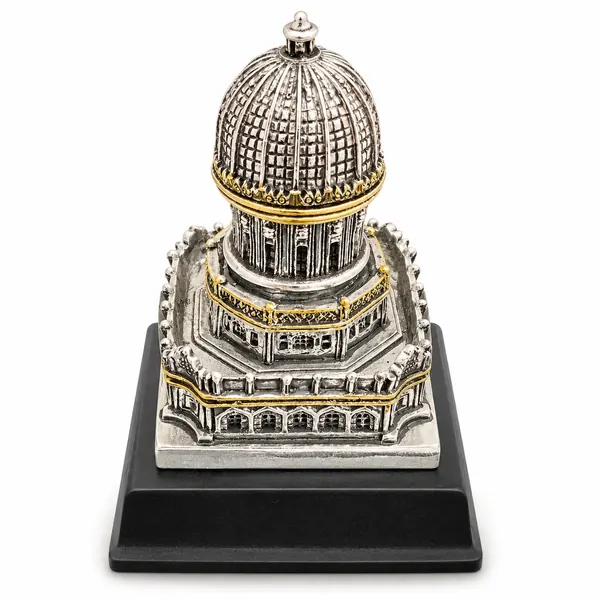
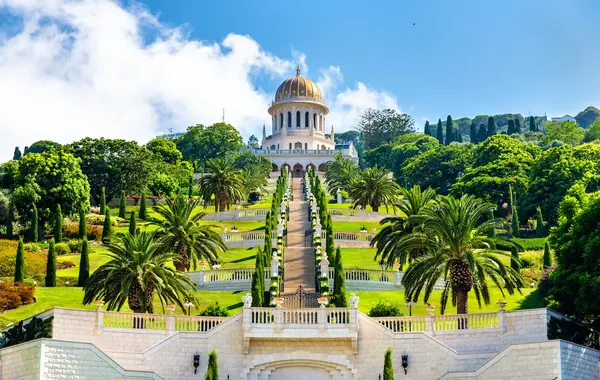
Not a symbol in the formal sense, but the golden-domed Shrine of the Báb on Mount Carmel is probably the most recognised image of the Bahá’í Faith worldwide. Models, plates and photographs of the Shrine are cherished keepsakes for pilgrims and visitors – see our Shrine of the Báb model and Haifa plate, and our guide to visiting the gardens.
Using Bahá’í symbols with respect
- Jewelry is natural for the ringstone symbol and the star. They were made, or are widely used, for exactly that.
- Give the Greatest Name a place of honour. Framed calligraphy, hung on a wall, is the respectful way to display it.
- Avoid novelty items. Symbols of any faith sit awkwardly on throwaway objects; choose something that will be kept.
- When in doubt, ask. If you are buying for a Bahá’í friend, they will appreciate the thought – and the chance to tell you what the symbol means to them.
Ready to choose? Browse Bahá’í gifts or read our Bahá’í gift ideas.
Frequently asked questions
What is the official symbol of the Bahá’í Faith?
Shoghi Effendi explained that, strictly speaking, the five-pointed star is the symbol of the Faith, as used by the Báb. In practice the nine-pointed star is the emblem most people recognise, and the ringstone symbol and the Greatest Name are also widely used.
What does the Bahá’í ringstone symbol mean?
Designed by ‘Abdu’l-Bahá, it is a stylised form of the letters B and H, from the word Bahá. In the explanation most often quoted, its three horizontal lines stand for the world of God, the world of His Manifestations and the world of humanity, the vertical line for the link between them, and the two stars for the Báb and Bahá’u’lláh.
Why do Bahá’ís use the number nine?
Nine is the numerical value of the word “Bahá” (glory) in the abjad system, in which each Arabic letter has a number. As the highest single digit it also suggests completeness, and Bahá’í Houses of Worship are built with nine sides.
What is the Greatest Name?
The phrase “Yá Bahá’u’l-Abhá” – “O Thou the Glory of the Most Glorious” – most famously in the calligraphy of Mishkín-Qalam. It is displayed with reverence in Bahá’í homes and centres. The related greeting “Alláh-u-Abhá” means “God is Most Glorious”.
Is it respectful to wear Bahá’í symbols as jewelry?
Yes – the ringstone symbol was designed to be worn on a ring, and many Bahá’ís wear ringstone or nine-pointed star jewelry every day. The Greatest Name calligraphy is usually treated with more reserve and displayed in a place of honour.