Israel guide
What to buy in Israel: Israeli gift and souvenir ideas
The best gifts and souvenirs to bring home from Israel – hamsas, Judaica, Jerusalem keepsakes, Dead Sea products, olive wood, food gifts – with packing tips and what to skip.
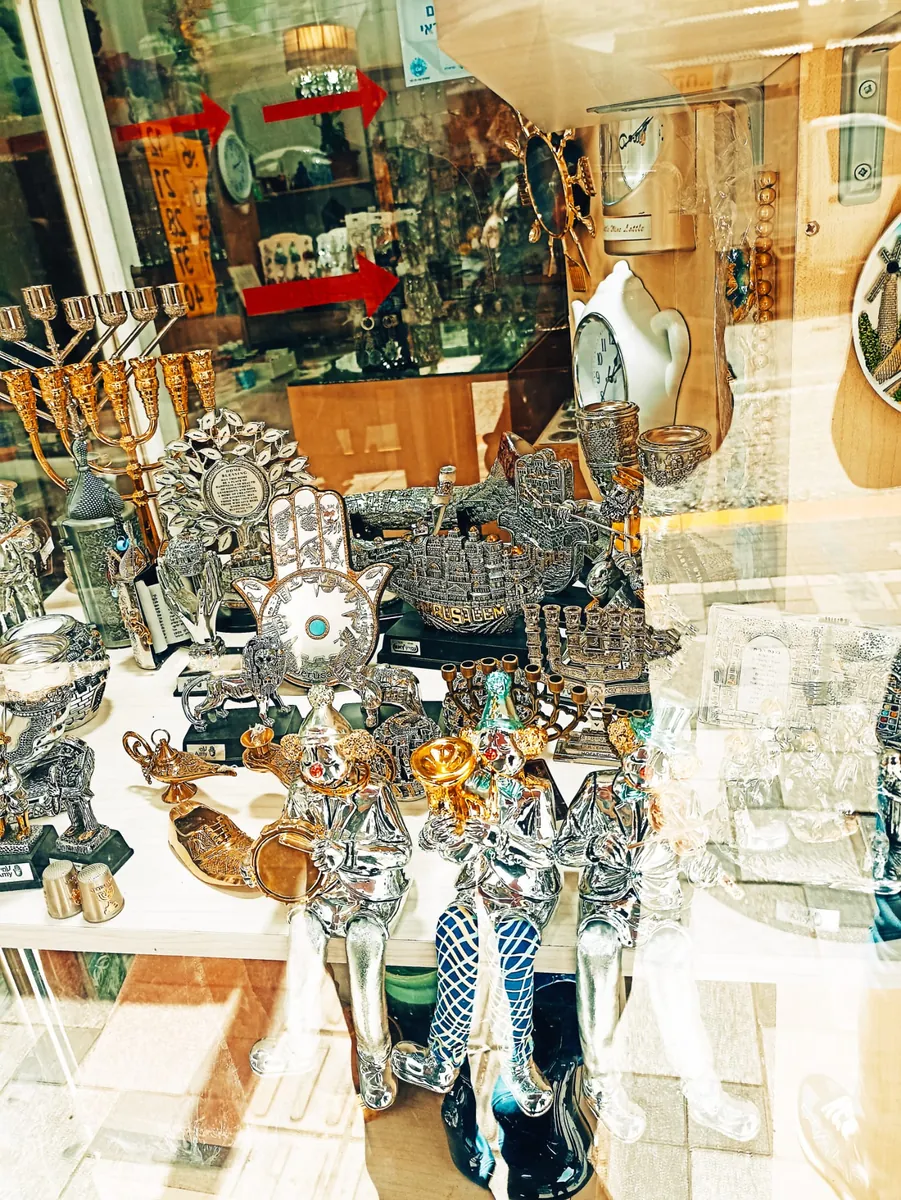
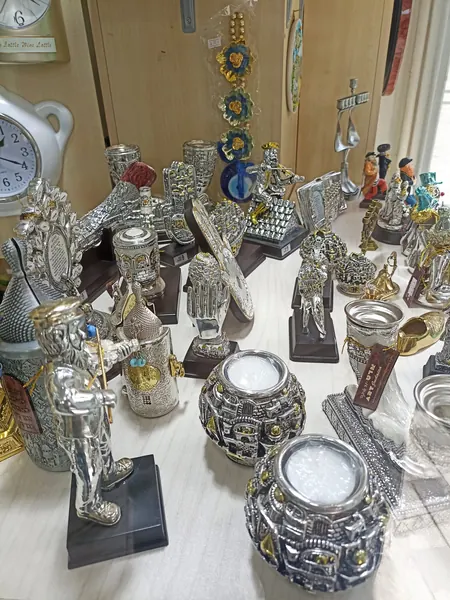
Israel packs thousands of years of history, three great religions and a lively modern culture into a small country, and its souvenirs reflect all of it. Here are fifteen gifts worth bringing home – what they are, who they suit, and where to find them. We sell some of them in our shop in Haifa; for the rest, we point you in the right direction.
Judaica and Jewish symbols
1. A hamsa
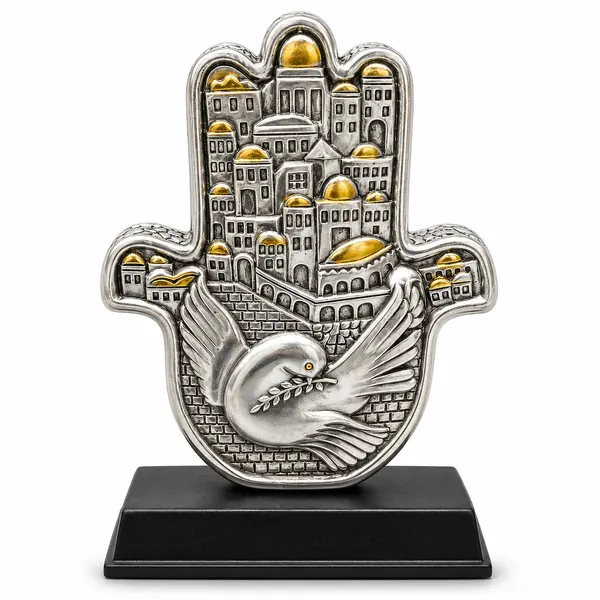
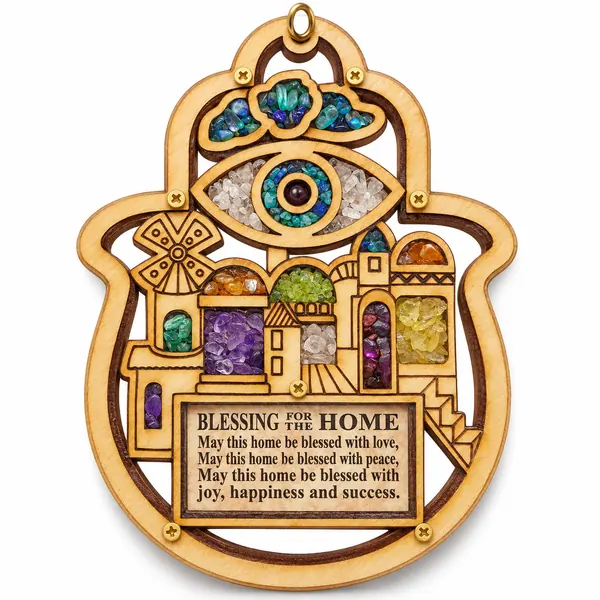
The palm-shaped hamsa – from the Hebrew and Arabic words for “five” – is shared by Jewish, Muslim and Christian communities across the Middle East and North Africa. Hung by the door or given as a wish for good luck and protection, it is probably the single most popular gift from Israel. See our Jerusalem hamsa.
2. A seven-branch menorah
The ancient lampstand of the Temple and the emblem of the State of Israel. A decorative menorah is a striking gift for anyone with a connection to Israel.
3. A hanukkiah
The nine-branched Hanukkah lamp, lit over the eight nights of the festival. Not the same as a menorah – our Judaica guide explains the difference.
4. A Kiddush cup
The cup used for the blessing over wine on Shabbat and festivals – a classic gift for a Jewish wedding, a new home or a bar or bat mitzvah.
5. Shabbat candle holders
Two candles are lit on Friday evening to welcome Shabbat. Candle holders decorated with Jerusalem’s skyline bring a piece of the city to the table.
6. Klezmer musician figurines
Silver-tone figures of Jewish musicians – fiddlers, horn players and more – are a long-standing favourite souvenir. See our klezmer shelf-sitters.
Jerusalem, Haifa and the Holy Land
7. A Jerusalem keepsake
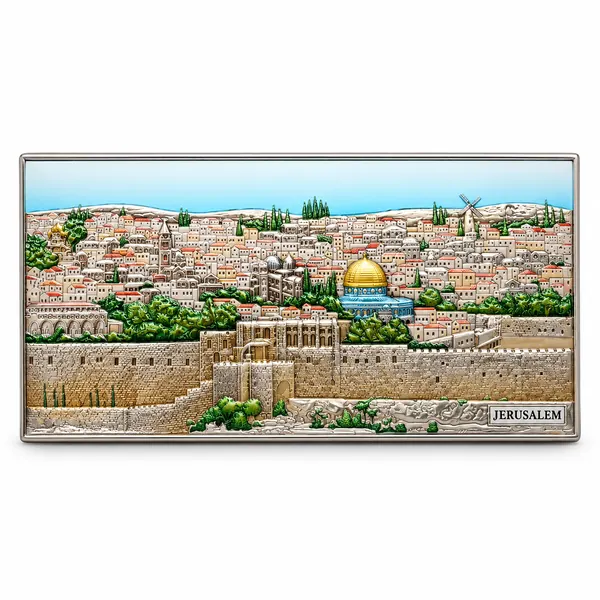
Models, plaques and candle holders showing the walls and domes of the Old City are among the most requested souvenirs of Israel, for visitors of every faith – like our 3D Jerusalem panorama.
8. A souvenir of the Bahá’í Gardens
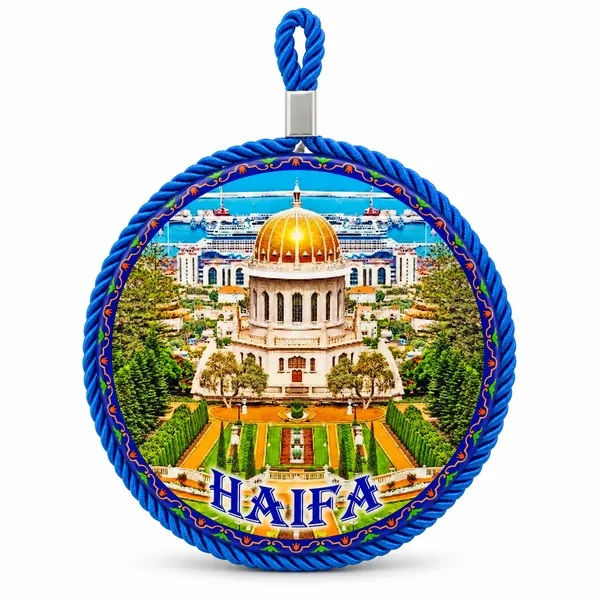
Haifa’s landmark is the golden-domed Shrine of the Báb above nineteen terraces. A Shrine of the Báb plate or model is a souvenir that could only come from Haifa. See all Haifa souvenirs.
9. Bahá’í ringstone jewelry
For Bahá’í friends, a ring or bracelet with the ringstone symbol, bought near the Bahá’í World Centre, is especially meaningful. See Bahá’í jewelry.
Crafts and jewelry
10. Armenian ceramics
Hand-painted Armenian pottery – tiles, bowls and plates in blues, greens and turquoise – has been made in Jerusalem for over a century and is one of the most beautiful crafts of the Holy Land. Look for it in Jerusalem’s Armenian Quarter.
11. Olive wood
Carvings, bowls and nativity sets made from olive wood are traditional souvenirs of the Holy Land, valued for the wood’s warm, swirling grain.
12. Eilat stone and Roman glass jewelry
Eilat stone, a blue-green copper mineral from the south of the country, is often called Israel’s national stone. Roman glass jewelry is set with fragments of ancient glass whose iridescent patina comes from centuries underground; reputable sellers provide a certificate.
Food and drink
13. Halva, tahini, za’atar and dates
Sesame halva in dozens of flavours, rich tahini, the herb blend za’atar, Medjool dates, silan (date syrup) and coffee with cardamom are delicious, affordable gifts. In Haifa, Talpiot Market in Hadar – the same neighbourhood as our shop – is a good place to start.
14. Israeli wine
Wineries in the Galilee, the Golan Heights and the Judean Hills produce excellent wines. Two notes: observant Jewish friends will want a bottle with kosher certification, and Bahá’ís and observant Muslims do not drink alcohol – choose a different gift for them.
Dead Sea products
15. Dead Sea salts, mud and creams
Cosmetics made with minerals from the Dead Sea, the lowest point on earth, are sold all over Israel and make easy gifts. Pack jars in checked luggage or keep them within the liquid limits for hand luggage.
Packing and customs tips
- Liquids: creams, oils, honey and wine must follow airline liquid rules in hand luggage – pack them in your checked bag.
- Food: packaged foods usually travel well, but check your home country’s rules on meat, dairy, fresh produce and seeds.
- Fragile items: wrap ceramics and porcelain in clothing and carry them in your hand luggage.
- Antiquities: genuine antiquities need an export permit from the Israel Antiquities Authority; licensed dealers arrange it.
Shopping in Haifa?
Our shop on Hertzel Street sells Judaica, hamsas, Jerusalem pieces, Haifa souvenirs and Bahá’í gifts, a short walk from the Bahá’í Gardens. Plan your visit.
Frequently asked questions
What is the most popular souvenir from Israel?
The hamsa is probably the most recognisable, along with Judaica such as menorahs and Kiddush cups, Jerusalem keepsakes, Dead Sea cosmetics, olive wood and food gifts like halva, dates and za’atar.
Can I take food gifts home from Israel?
Packaged foods like halva, spices, dates and coffee are usually fine, but every country has its own import rules – especially for meat, dairy, fresh produce and seeds. Check your home country’s customs rules, and remember the airline limits on liquids in hand luggage.
Can I take antiquities out of Israel?
Genuine antiquities can only be exported with a permit from the Israel Antiquities Authority. Licensed dealers can arrange this; ordinary souvenirs and modern crafts need no permit.
Where can I buy souvenirs in Haifa?
Armant on Hertzel Street in Hadar HaCarmel sells Judaica, hamsas, Jerusalem pieces, Haifa keepsakes and Bahá’í gifts, a short walk from the Bahá’í Gardens. For food gifts, Talpiot Market is in the same neighbourhood.