Israel guide
Judaica gifts explained: menorah, Kiddush cup, mezuzah and more
A plain-English guide to Judaica gifts: menorah vs hanukkiah, what Kiddush cups and mezuzahs are for, and how to choose Jewish gifts with confidence.
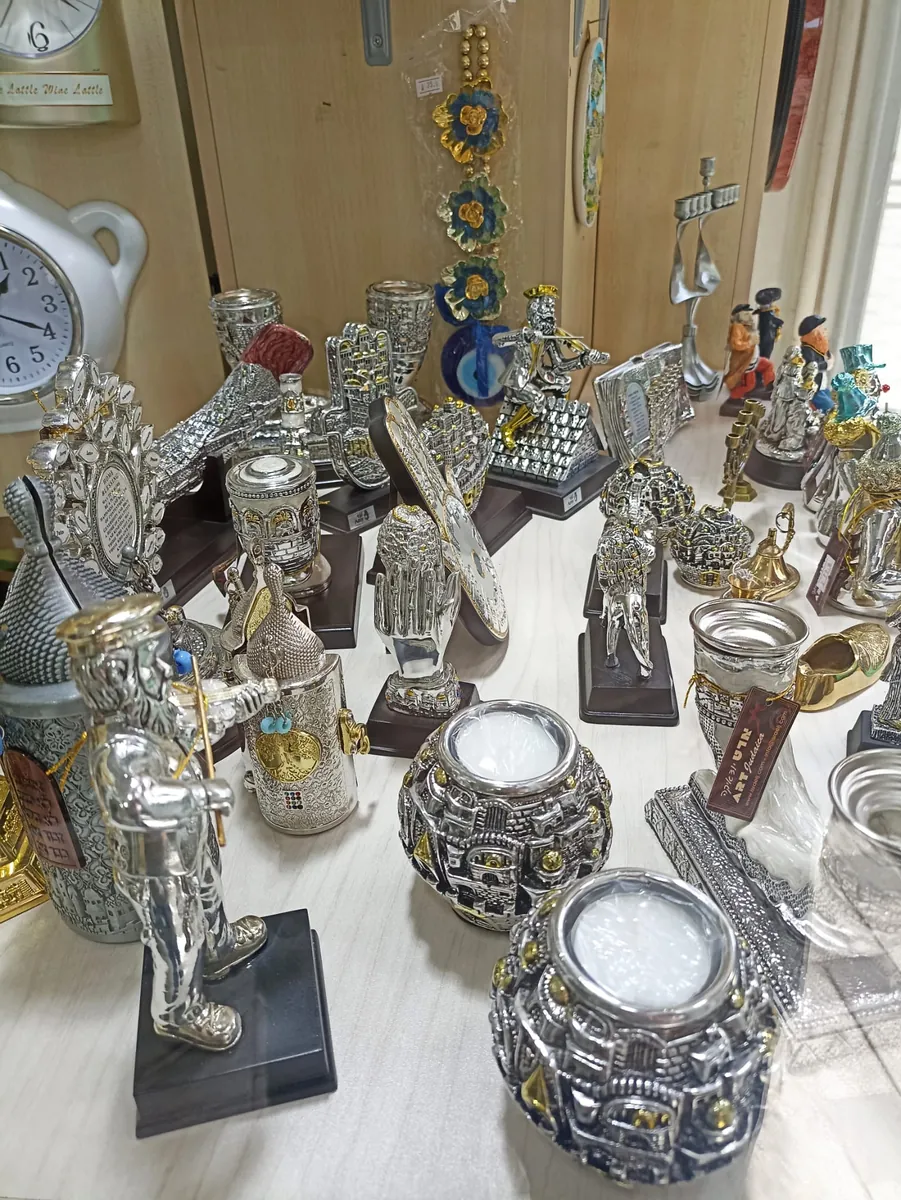
Judaica – the objects of Jewish ritual and home life – makes some of the most meaningful gifts from Israel. But if you did not grow up with them, the names can be confusing: is it a menorah or a hanukkiah? What goes inside a mezuzah? This plain-English guide explains the pieces you will see in our shop window, what each is for, and who it suits.
Menorah and hanukkiah
The menorah: seven branches
The seven-branched menorah recalls the golden lampstand that stood in the ancient Temple in Jerusalem. It is one of the oldest symbols of the Jewish people and the central image of the emblem of the State of Israel. Today it is mostly decorative – a striking piece for a shelf or a table.
The hanukkiah: nine branches
The lamp lit during Hanukkah, the eight-day festival of lights in late autumn or early winter, has nine branches: one for each night of the festival, plus the shamash (“helper”), usually set higher or apart, which lights the others. One more light is added each night. It is traditional to place the hanukkiah in a window, to share the light with passers-by. If you are buying for Hanukkah, this is the one you want – and a beautiful hanukkiah is a treasured family gift.
Shabbat: candles and Kiddush
Shabbat, the day of rest, begins at sunset on Friday. Two candles are lit shortly before sunset, and the evening meal begins with Kiddush, a blessing over wine.
- Shabbat candlesticks – usually a pair – are one of the most personal gifts for a Jewish home, often given at a wedding.
- A Kiddush cup holds the wine for the blessing. Silver-tone cups, sometimes with a matching saucer, are classic gifts for weddings, a bar or bat mitzvah or a new baby, and many families pass them down.
- A challah cover and board – for the braided Shabbat loaves – round out the Shabbat table.
Havdalah
On Saturday evening, Shabbat ends with Havdalah (“separation”), a short ceremony using a braided candle with several wicks, a cup of wine and a spice box whose scent is passed around. A Havdalah set is a thoughtful, slightly unusual gift for someone who already has candlesticks and a Kiddush cup.
Mezuzah
A mezuzah is fixed to the doorposts of a Jewish home. The important part is the klaf, a small parchment scroll handwritten by a trained scribe with two passages from Deuteronomy, beginning with the Shema. The decorative case protects it.
- It is placed on the right-hand doorpost as you enter, in the upper third; many Ashkenazi Jews set it at a slant.
- Decorative cases are often sold without a scroll; a kosher scroll is bought separately from a reliable source.
- A mezuzah case is a lovely housewarming gift; for the scroll, it is best to let the recipient choose.
Hamsa and home blessing
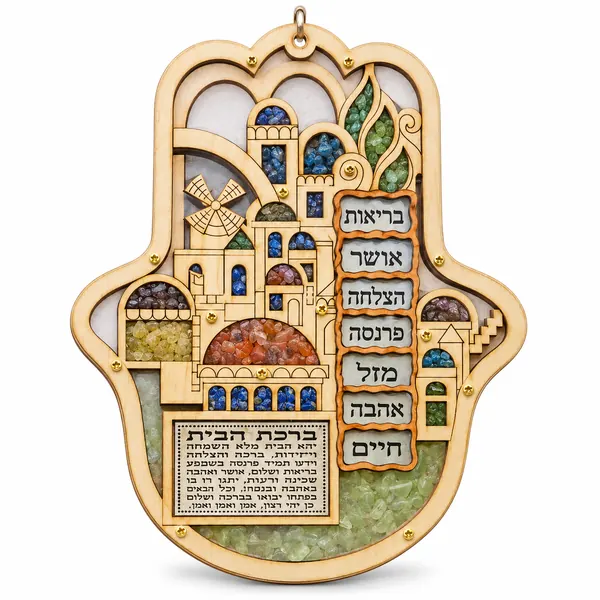
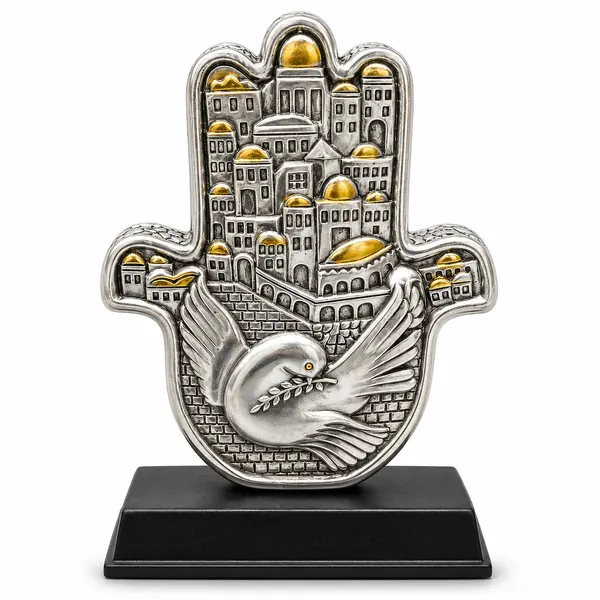
The hamsa is not strictly a ritual object but a much-loved amulet, shared across the region: in Jewish tradition it is sometimes called the Hand of Miriam, in Muslim tradition the Hand of Fatima. Hung near the entrance or displayed on a shelf, it is a wish for protection and good fortune. See our Jerusalem hamsa.
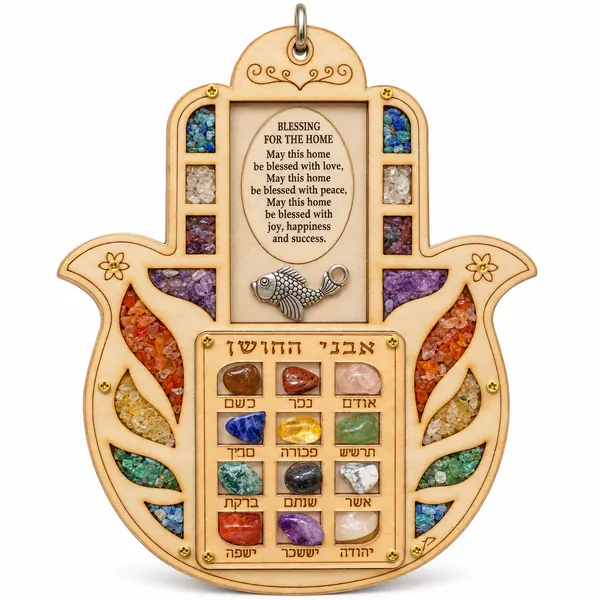
A Birkat HaBayit, or home blessing, is a plaque inscribed with a blessing for the household – often designed as a Tree of Life – and is a traditional housewarming present. See our Birkat HaBayit hamsa.
Festival and celebration gifts
- Passover: a Seder plate, with places for the six symbolic foods, or a matzah cover.
- Rosh Hashanah: a honey dish, for the custom of dipping apples in honey for a sweet new year, or our shofar blower figurine.
- Bar and bat mitzvah: a Kiddush cup, a tallit (prayer shawl) or a piece of jewelry.
- Weddings: Shabbat candlesticks, a Kiddush cup or a home blessing.
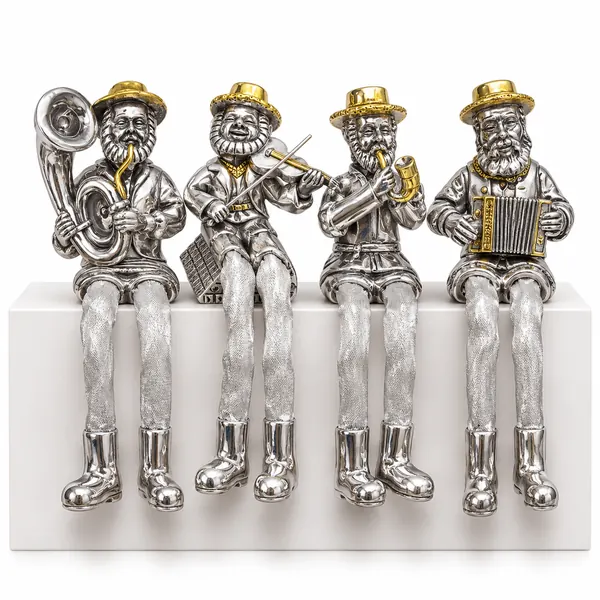
And for pure fun, our silver-tone klezmer musician figurines celebrate the joyful music of Jewish weddings.
Choosing Judaica with confidence
- Know the recipient. For an observant family, functional ritual items are welcome; for others, decorative pieces may suit better.
- Ritual items have rules. A hanukkiah’s lights should sit in a straight line at the same height, apart from the shamash. If in doubt, ask us in the shop.
- Mind the wine and food. If you add wine or sweets to a gift for an observant friend, look for kosher certification.
- Anyone can give Judaica. A thoughtful piece from Israel is a warm gift from friends of any faith.
See it in person
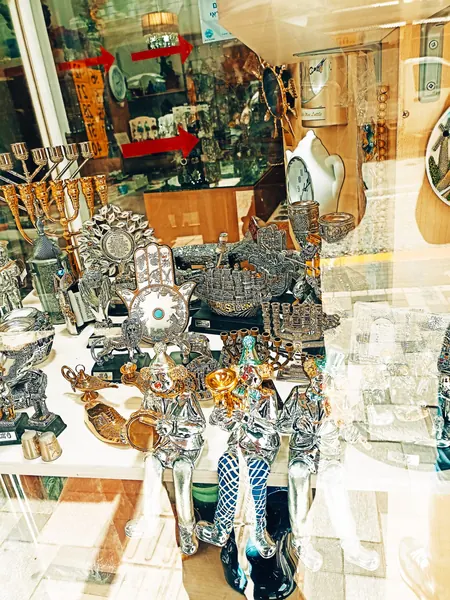
Our shop window on Hertzel Street, Haifa, is full of Judaica – menorahs and hanukkiot, hamsas, Kiddush cups, candle holders and musician figurines. Browse Judaica or plan your visit.
Frequently asked questions
What is the difference between a menorah and a hanukkiah?
A menorah has seven branches and recalls the golden lampstand of the Temple in Jerusalem; it is the emblem of the State of Israel. A hanukkiah has nine – one for each of the eight nights of Hanukkah plus the shamash, the helper candle used to light the others.
Does a mezuzah come with the scroll?
Often not. Decorative mezuzah cases are usually sold empty; the scroll (klaf) is handwritten on parchment by a trained scribe and bought separately, ideally from a reliable source that can vouch for it.
What is a Kiddush cup used for?
It holds the wine (or grape juice) over which the Kiddush blessing is said at the start of Shabbat and festival meals.
Can I give Judaica to a non-Jewish friend?
Yes. Pieces like hamsas, Jerusalem candle holders and musician figurines are enjoyed as decorative gifts by people of every background. Ritual items such as a kosher mezuzah scroll are best given to someone who will use them.
Is the hamsa a Jewish symbol?
It is shared by Jewish, Muslim and Christian communities across the Middle East and North Africa. In Jewish tradition it is sometimes called the Hand of Miriam, and in Muslim tradition the Hand of Fatima.